

If you’ve ever rubbed your neck after a long day at the computer, felt your shoulders creeping up toward your ears while scrolling, or caught yourself slouching without even realizing it, you’re not alone. In today’s tech-driven world, our bodies are being shaped—literally—by the positions we spend the most time in. For many people, that constant forward head posture and rounded shoulder position leads to a predictable postural pattern called Upper Cross Syndrome.
Upper Cross Syndrome isn’t just a fancy term. It’s a chronic imbalance that develops when certain muscles in the neck, upper back, and chest become tight, while others become weak or overstretched. Over time, this imbalance affects how you move, how you breathe, and how you feel throughout the day. You may notice:
- Persistent neck tension
- Stiffness across the shoulders and upper back
- Frequent headaches
- Fatigue and poor posture
- A slouched or rounded appearance when sitting or standing
While technology isn’t going anywhere, the good news is that your discomfort doesn’t have to stay. With the right combination of chiropractic adjustments, soft-tissue work, and intentional movement, your body can restore balance and begin to feel—and function—like it’s meant to again.
Why “Tech Neck” Happens in the First Place
Most people don’t set out to develop poor posture. It happens gradually and silently.
Hours spent leaning toward a laptop, staring down at a phone, or sitting with the shoulders rolled forward encourage the muscles on the front of the body to tighten. At the same time, the muscles along the mid-back and between the shoulder blades weaken from lack of use. This upper-body tug-of-war shifts the head forward and puts extra strain on the spine and supporting musculature.
As this pattern becomes habitual, you may experience:
- Reduced mobility through the upper back (thoracic spine)
- Tightness in the chest and neck
- Overworked upper traps
- Shallow breathing
- Increased tension around the base of the skull
These changes don’t just affect posture—they influence everything from energy levels to the quality of your movement.
How Chiropractic Care Helps Restore Balance
One of the most effective ways to address Upper Cross Syndrome is to restore proper motion to the spine and surrounding joints. When certain areas of the upper back become restricted, other areas—including the neck—are forced to overcompensate. That often leads to stiffness, pain, and the feeling that your body is “locked up.”
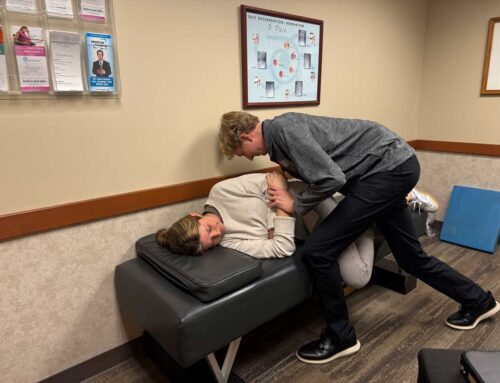
Chiropractic adjustments help:
- Improve movement through the thoracic spine
- Reduce tension in the neck and shoulders
- Increase mobility where the joints have become restricted
- Encourage better alignment so muscles can work more efficiently
When combined with targeted soft-tissue work, adjustments allow the overactive muscles to relax and the underused muscles to start firing again, helping your posture slowly shift back toward a healthier balance.

Mobility Moves That Make a Noticeable Difference
Chiropractic care lays the groundwork, but the daily habits you practice between visits are just as important. Even a few minutes of mindful movement each day can help you counteract the forward-rounded posture that develops from long hours at a desk.
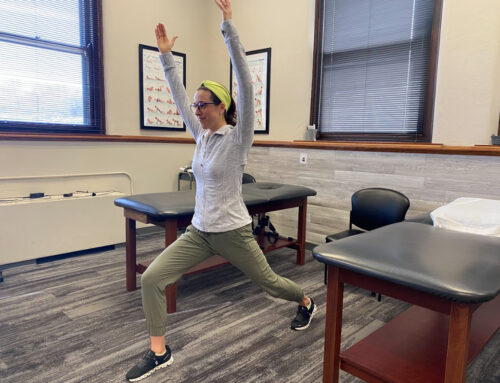
Some of the most beneficial resets include:
- Thoracic extension drills to open the chest and improve mid-back mobility
- Gentle neck movements to decrease tension around the skull
- Activation exercises that re-engage the muscles that support healthy, upright posture
- Chest-opening stretches to counteract tightness from sitting or device use
You don’t need a workout plan—just simple, repeatable movements you can sprinkle into your day for long-term relief.
Small Ergonomic Tweaks, Big Postural Benefits
In many cases, improving posture is less about doing more and more about doing things differently. Making small adjustments to your daily environment can drastically reduce strain on your upper body.
Here are a few easy changes from our recent video:
- Raise your screen so your eyes meet the top third of the monitor
- Support your arms so your shoulders don’t lift or round forward
- Keep your feet grounded to avoid sliding or slouching
- Bring your phone to eye level instead of tipping your head down
These subtle shifts help your body maintain a more natural alignment, decreasing the amount of stress placed on the neck and shoulders.
Taking the First Step Toward Lasting Relief
Upper Cross Syndrome and “tech neck” may be common, but they’re not something you have to simply live with. When you understand what’s happening in your body—and support it with the right adjustments, movements, and daily habits—you can feel better, move better, and breathe more freely.
Your spine is designed to move—and with a little mindful care, it absolutely can.




You must be logged in to post a comment.