

Have you ever bent over to pick something up—something light, even—and suddenly felt that sharp, unmistakable pain in your back? Many people describe it as their “back going out,” but what’s really happening inside the spine is often related to an injury in one of the discs that cushions and protects it.
What’s Really Going On When You Have a Disc Injury
The spine is made up of vertebrae separated by soft, gel-like discs that act as shock absorbers. These discs allow movement, flexibility, and support—but they can also become injured over time or with sudden strain. Two of the most common disc issues are herniated discs and degenerative disc disease.
- Herniated discs often occur in younger individuals when the soft inner layer of the disc pushes through its tougher outer shell. This can irritate nearby nerves, sometimes causing pain that radiates down the leg—a condition often referred to as sciatica.
- Degenerative disc disease, on the other hand, is more common as we age. Over time, discs lose height and hydration, which can lead to stiffness, pain, and inflammation in the lower back.
While these issues can sound intimidating, the good news is that most disc problems can be managed—and often fully resolved—through conservative care such as chiropractic treatment, movement-based rehabilitation, and lifestyle changes.
Step 1: Identifying the Source of the Pain
When back pain begins, especially after bending or sitting for long periods, it’s important to identify whether the source is disc-related. A thorough chiropractic evaluation focuses on understanding the pattern of your pain—where it starts, how it moves, and what makes it better or worse.
For example, if pain worsens when bending forward or sitting but feels better when standing or walking, this can be a strong indicator of disc involvement. Using specific assessments, your chiropractor can determine how your spine is moving (or not moving) and pinpoint the exact level affected.
Step 2: Movement-Based Care and the McKenzie Approach
Once the problem area is identified, treatment focuses on restoring proper spinal motion—safely and effectively. One technique that often proves beneficial for disc injuries is the McKenzie method, a movement-based approach that often encourages gentle spinal extension.
This technique helps relieve pressure on the injured disc and encourages the pain to “centralize,” or move from the leg back toward the spine—a positive sign that healing is taking place. Rather than forcing motion or pushing through pain, this method uses controlled, guided movements that promote natural recovery and reduce inflammation.
Step 3: Restoring Motion in the Acute Phase
In the early stages of a disc injury, every movement can feel daunting. During this acute phase, the body’s natural response is to tighten up muscles and restrict movement around the injured area to protect it. While this is a normal reaction, it can also lead to stiffness and prolong healing if not addressed gently.
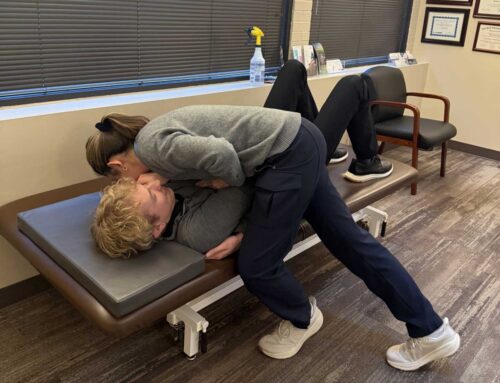
That’s where chiropractic adjustments and specialized tools—like flexion-distraction or decompression tables—come in. These techniques help restore gentle, targeted motion to the joints and discs, reducing pressure and promoting circulation to the area. The key is to move within comfort and gradually rebuild mobility without aggravating the injury.
Step 4: Building Core Stability for Long-Term Protection
Once pain begins to subside, the focus shifts to prevention and long-term strength. The core muscles—especially the diaphragm, deep abdominals, and pelvic stabilizers—play a crucial role in supporting your spine.
When these muscles aren’t functioning properly, your body compensates by overusing other muscle groups, creating imbalances that can lead to recurring pain. By retraining your core to activate correctly, you can restore stability, improve posture, and protect your spine from future injuries.
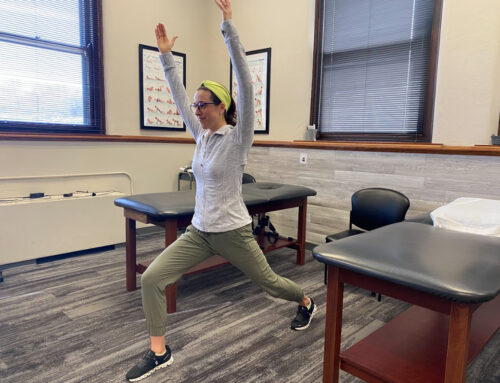
Your chiropractor can guide you through exercises and breathing techniques that strengthen the core from the inside out. This kind of functional training is especially helpful for anyone who sits for long hours or performs repetitive lifting.

Moving Forward with Confidence
Back pain doesn’t have to control your life. With the right evaluation, personalized care, and movement-based recovery plan, it’s possible to heal disc injuries naturally and get back to doing what you love—without relying on medications or invasive procedures.
If you’ve been struggling with recurring lower back pain, or you’ve noticed that certain movements or positions aggravate your symptoms, it’s time to take action. A conservative, chiropractic approach focused on movement, stability, and education can help you recover safely and prevent future flare-ups.




You must be logged in to post a comment.